TATTOO PAIN CHART
Complete Guide to Tattoo Pain Levels by Body Part
Complete Guide to Tattoo Pain Levels by Body Part
.jpg)
.jpg)
.jpg)
.jpg)
.jpg)
.jpg)
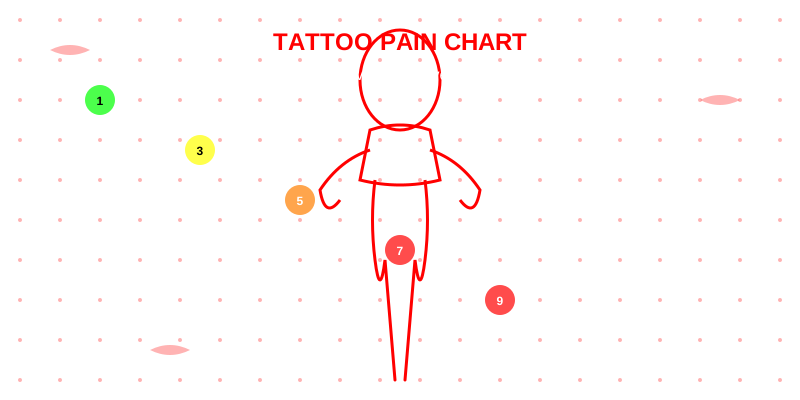
Select a body part from the dropdown menu below to discover its pain level and get personalized tips for that area. This interactive tool helps you understand which body parts are most and least painful for tattoos. For detailed information, check our female pain chart and male pain chart pages.
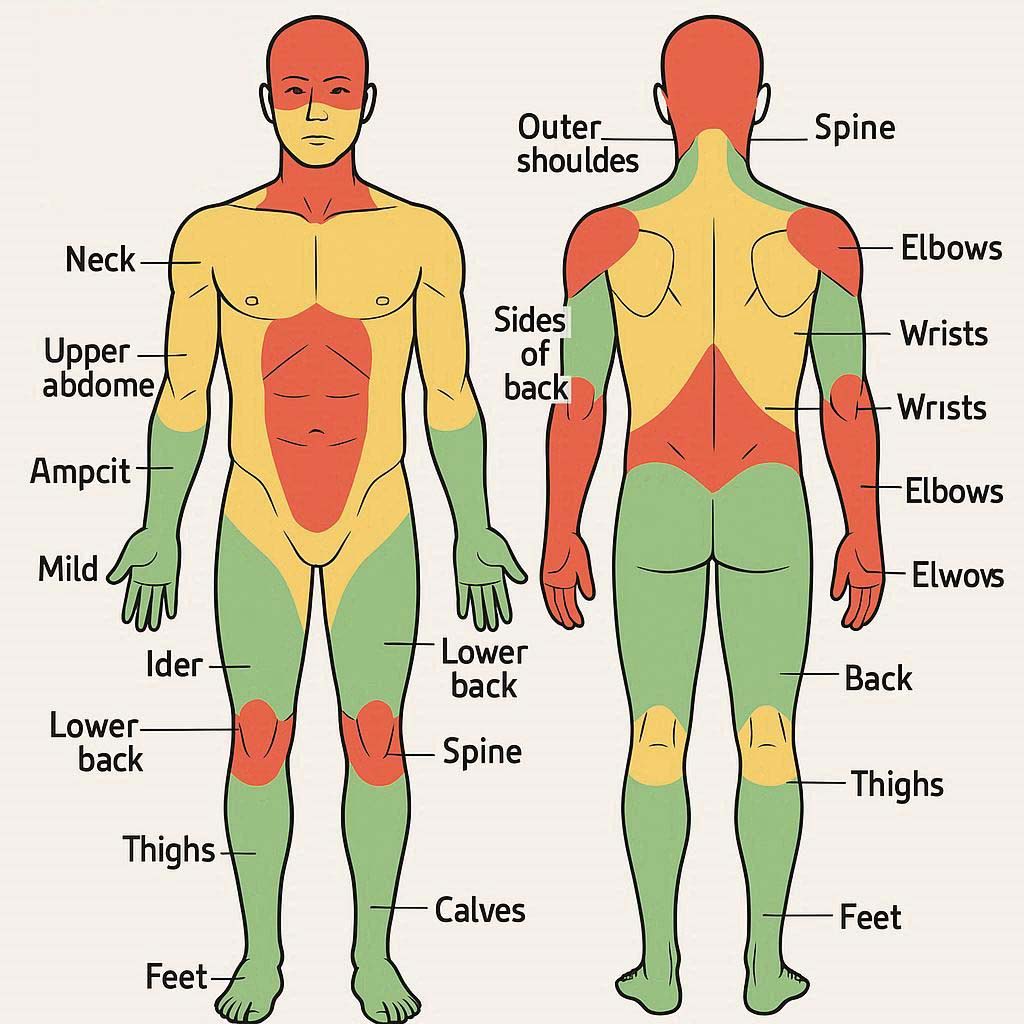
| Body Part | Pain Level | Pain Description | Tips |
|---|---|---|---|
| OUTER ARM | 2/10 | Mild discomfort, like a cat scratch | Great for first tattoos. Minimal pain with good healing. |
| BICEP | 2/10 | Very mild pain, excellent for beginners | One of the least painful areas. Great muscle padding. |
| SHOULDER | 2/10 | Minimal pain, great for first tattoos | Excellent muscle padding. Very comfortable area. |
| THIGH | 2/10 | Very mild pain, excellent for beginners | Great muscle padding. Very comfortable area. |
| FOREARM | 3/10 | Low to moderate pain, very manageable | Popular choice for first tattoos. Heals well. |
| TRICEP | 3/10 | Moderate pain, manageable for most people | Good area for larger designs. Heals relatively quickly. |
| BACK | 3/10 | Low to moderate pain depending on area | Upper back is less painful than lower back. |
| CALF | 3/10 | Low to moderate pain, very manageable | Good area for detailed work. Heals relatively quickly. |
| INNER ARM | 4/10 | Moderate pain due to sensitive skin | More sensitive than outer arm. Take breaks if needed. |
| HIP | 4/10 | Moderate pain, manageable for most | Good area for larger designs. Heals well. |
| WRIST | 5/10 | Moderate to high pain, sensitive area | Thin skin makes this area more painful. |
| STOMACH | 5/10 | Moderate to high pain, varies by area | More painful when stomach is empty. Eat before session. |
| CHEST | 6/10 | High pain level, especially near sternum | Sternum area is particularly painful. Take breaks. |
| ANKLE | 6/10 | High pain due to thin skin and bones | Thin skin makes this area more painful. |
| EAR | 6/10 | High pain due to cartilage and thin skin | Cartilage makes this area very painful. |
| KNEE | 7/10 | High pain level, very sensitive area | Extremely sensitive. Consider numbing options. |
| HAND | 7/10 | High pain level, very sensitive area | Thin skin and many nerve endings. Very painful. |
| NECK | 7/10 | High pain level, very sensitive area | Very sensitive area. Consider numbing options. |
| SPINE | 8/10 | Very intense pain, one of the most painful areas | Extremely sensitive. Consider numbing options. |
| FINGER | 8/10 | Extremely painful, very small area | Extremely painful due to thin skin and bones. |
| LIP | 8/10 | Extremely painful, very sensitive area | Extremely sensitive. Consider numbing options. |
| FOOT | 8/10 | Very intense pain, extremely sensitive | One of the most painful areas. Prepare for intense pain. |
| RIBS | 9/10 | Extremely painful, very challenging to endure | One of the most painful areas. Prepare for intense pain. |
| FACE | 9/10 | Extremely painful, most sensitive area | Most painful area. Consider all options carefully. |
| BEHIND EAR | 6/10 | High pain due to cartilage and thin skin | Cartilage area is very sensitive. Consider numbing options. |
| SLEEVE | 4/10 | Moderate pain, varies by area covered | Pain level depends on specific areas within the sleeve design. |
| COLLARBONE | 6/10 | High pain due to thin skin over bone | Thin skin over bone makes this area very painful. |
| SIDE | 5/10 | Moderate to high pain, varies by specific area | Pain level depends on exact location on the side. |
| INNER BICEP | 4/10 | Moderate pain, more sensitive than outer bicep | More sensitive than outer bicep. Take breaks if needed. |
| ELBOW | 7/10 | High pain level, very sensitive area | Extremely sensitive joint area. Consider numbing options. |
| RIB CAGE | 8/10 | Very intense pain, extremely sensitive area | Extremely painful area. Prepare for intense pain. |
| STERNUM | 8/10 | Very intense pain, extremely sensitive area | Extremely painful. Consider numbing options. |
Women generally have different pain thresholds and may experience varying levels of discomfort based on hormonal cycles and body composition.
View Female Pain ChartMen typically have different pain tolerance levels and may experience tattoo pain differently due to muscle mass and skin thickness variations.
View Male Pain ChartCompare pain levels between genders to understand the differences in tattoo pain experience across body parts.
View Comparison ChartAreas with more muscle, fat, or nerve endings tend to be more painful.
Personal pain threshold varies greatly between individuals.
Larger tattoos and longer sessions increase overall discomfort.
Experienced artists can minimize pain through technique.
Healthy, well-hydrated skin handles tattooing better.
Relaxation and positive mindset can reduce perceived pain.
Yes, getting a tattoo does involve some level of pain, but the intensity varies greatly depending on the body part, your pain tolerance, and the size of the tattoo. Most people describe it as a scratching or burning sensation.
Most people can handle tattoo pain, especially if they choose a less painful area for their first tattoo. The pain is temporary and manageable with proper preparation and mindset.
The most painful areas typically include ribs, spine, hands, feet, neck, and face. These areas have more nerve endings, less muscle/fat padding, or are more sensitive.
The least painful areas include outer arms, thighs, shoulders, upper back, and calves. These areas have more muscle or fat padding and fewer nerve endings.
The actual tattooing pain stops immediately when the session ends. However, you may experience soreness, tenderness, and mild pain for 3-7 days during the healing process.
Some artists allow numbing creams, but you should always check with your tattoo artist first. Some creams can affect the tattooing process or healing. Professional numbing options are available at many tattoo shops.